

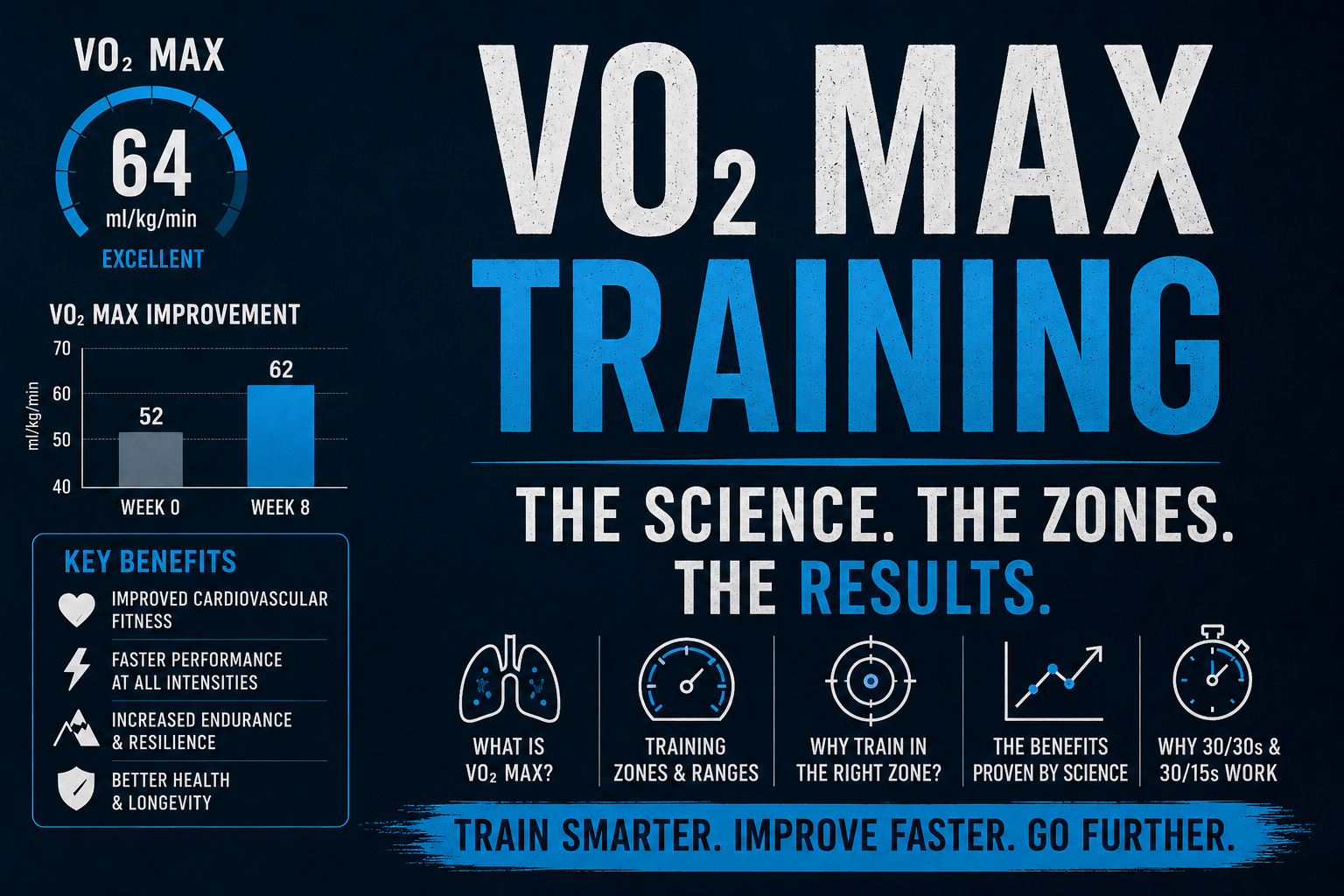
What Is VO₂max — and Why Does It Matter?
Part 1 of the VO₂max Series
People like to throw metrics and numbers around in endurance sport, one of those is VO₂max, and if somebody got a notification from a wearable device that their VO₂max has increased, or is high compared to their peers, you’re likely to hear all about it!
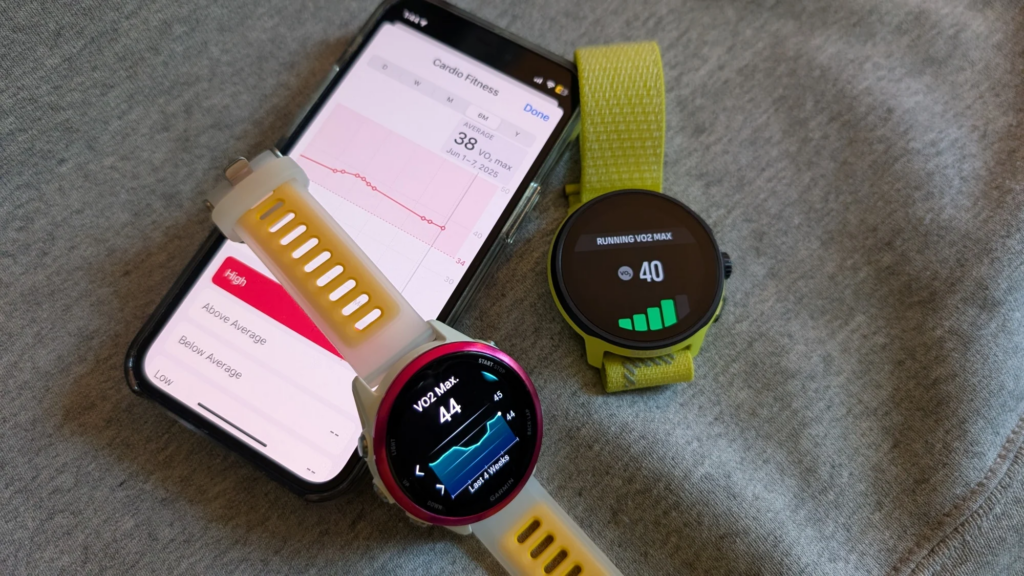
It appears in training plans, laboratory tests, cycling computers and performance reports. Coaches talk about improving it, athletes chase it, and training platforms often classify some of the hardest sessions as “VO₂max” work.
But what exactly is VO₂max and why does it matter to a cyclist, and perhaps most importantly, is having a high VO₂max enough to make you a better cyclist?
The short answer is no!
Sorry #notsorry for everyone that’s chasing that VO2 max estimate on your wearable!
VO₂max is important, but it is only one piece of the performance puzzle. Understanding what it represents helps explain both why VO₂max training works and why it needs to be used intelligently.
Going back to the essence of the theory of periodization by Tudor Bompa where we look to do the right training at the right time to get the right adaptions.
What exactly is VO₂max?
VO₂max is the maximum rate at which the body can take in, transport and utilise oxygen during exercise. It is usually expressed as a relative metric:
millilitres of oxygen per kilogram of body mass per minute (ml/kg/min)
If a cyclist has a VO₂max of 70 ml/kg/min, their body can utilise oxygen at a rate of approximately 70 millilitres per kilogram of body mass every minute at maximal aerobic exercise.
This metric can be misleading as VO₂max is generally expressed as a per kg (relative) metric and not an absolute value. To produce power, you need to process O2, and the more power you want to produce the larger the amount of O₂ you need to process every minute i.e.:
- 200W 2.6 l / min
- 300W 3.95 l / min
- 400W 5.2 l / min
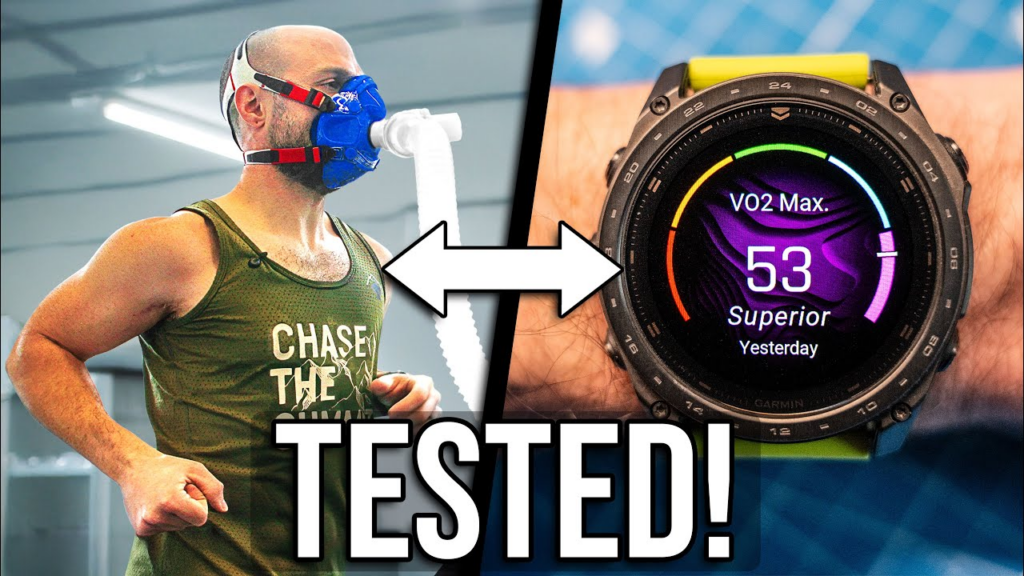
But VO₂max isn’t simply a measure of how well the lungs work, it represents the combined capacity of several systems.
- The lungs bring oxygen into the body
- The cardiovascular system transports it.
- The heart pumps blood around the body.
- Haemoglobin carries oxygen in the blood,
- Blood flow delivers oxygen to the working muscles
- The muscles extract the oxygen and finally the mitochondria use that oxygen to produce energy.
VO₂max therefore represents the integrated capacity of the oxygen delivery and utilisation system.

Why does VO₂max matter for cyclists?
Cycling is predominantly an aerobic sport, so a better system of processing oxygen is a good thing.
A higher VO₂max provides a larger aerobic ceiling and you can do more work aerobically, bonus!
Imagine two cyclists.
- Cyclist A has a VO₂max of 70 ml/kg/min
- Cyclist B has a VO₂max of 55 ml/kg/min
If both cyclists can sustain 80% of their VO₂max for a prolonged effort, Cyclist A has considerably more aerobic capacity available. This is one reason VO₂max is such an important performance variable.
VO₂max isn’t the same as FTP or (CP) Critical Power
This distinction is particularly important as VO₂max represents maximal oxygen consumption.
FTP is the highest average power output that a rider can sustain for approximately one hour without fatiguing and traditionally involves a 20-minute effort and calculating 95% of the average power of that effort to determin FTP. There are various other protocols, including some wehre you can take 100% of the 20 min effort as your FTP.
Critical Power represents the maximum power output a cyclist can sustain without continual fatigue accumulation. In practice, CP is derived from multiple time-trial efforts for varying durations and represents the boundary between aerobic and anaerobic energy systems.
They are related, but they are not interchangeable.
Two cyclists could have similar VO₂max values but significantly different FTP’s because performance depends on much more than the maximum amount of oxygen an athlete can consume.
It also depends on:
- The fraction of VO₂max that can be sustained
- Lactate thresholds
- Cycling economy
- Gross efficiency
- Fatigue resistance
- Aerobic durability
- Body mass
- Neuromuscular performance
- Anaerobic capacity
- Technical ability and
- Aerodynamics
Consider two cyclists with identical VO₂max values and if one can sustain 90% of VO₂max for an hour and the other can sustain 75%, their performance will be very different, which is why developing VO₂max is only part of the process.
The bigger goal is to develop the ability to use more of that aerobic capacity for longer.
Why train VO₂max?
If VO₂max represents an athlete’s aerobic ceiling, then VO₂max training is one way of attempting to raise that ceiling.
High-intensity interval training has repeatedly been shown to improve VO₂max.
A meta-analysis of 53 randomised controlled trials found that HIIT improved VO₂max. Interestingly, even short intervals of ≤30 seconds could produce meaningful improvements, although longer intervals of ≥2 minutes, higher interval volume and interventions lasting 4–12 weeks generally produced larger effects.
A separate meta-analysis in elite athletes also found improvements in VO₂max following HIIT compared with conventional training, this is important because it means VO₂max is trainable.
What actually creates the adaptation?
The importance of oxygen uptake during the interval
When we start a hard cycling interval, power rises almost immediately but VO₂ does not.
Oxygen consumption takes time to increase, the harder the effort, the greater the oxygen demand but the physiological response still takes time.
This means that a four-minute interval is not necessarily four minutes at VO₂max.
The athlete may spend the first minute progressively increasing oxygen consumption, followed by several minutes at a very high fraction of VO₂max.
This is why time in the zone (TiZ) matters and it also explains why simply producing the highest possible power isn’t necessarily the objective, the objective is to create a sufficiently high oxygen demand and sustain it for long enough to generate an adaptation.
Time at a high fraction of VO₂max
This concept has become increasingly important in the research. In a 2024 study, Odden and colleagues followed 22 well-trained cyclists through a nine-week interval-training intervention consisting of 21 sessions.
The researchers measured oxygen uptake during the actual training sessions rather than simply assuming that a particular power output represented VO₂max work.
They found that athletes who achieved a higher fraction of VO₂max during their intervals tended to experience greater improvements in:
- VO₂max
- Maximal power during the VO₂max test
- Power at 4 mmol/L blood lactate
- Overall performance index
The relationship with VO₂max improvement was particularly strong, with an adjusted R² of 0.54 which provides an important insight:
The physiological response matters more than the number written on the power meter.
VO₂max: the ceiling and not the whole house
VO₂max as the ceiling and training at lower intensities develops the floors below it (there’s that Zone 2 stuff) and threshold training improves the ability to operate close to that roof.
VO₂max training raises the ceiling itself.
But raising the roof isn’t enough, you can’t only train one aspect, we need to develop the ability to operate closer to it for longer which is why a well-designed endurance programme doesn’t consist of VO₂max training alone.
The athlete needs a combination of:
- Aerobic volume
- Threshold training
- VO₂max work
- Anaerobic and neuromuscular work
- Strength
- Recovery
Each contributes something different.
The key message
VO₂max is not simply a number on a laboratory report, it represents the maximum capacity of the body’s aerobic energy system to take in, transport and utilise oxygen.
For cyclists, it provides an important physiological ceiling, and performance depends on how much of that ceiling the athlete can use and for how long, this is why VO₂max training isn’t simply about riding as hard as possible, it’s about creating the right physiological stimulus.
What does an effective VO₂max session actually look like?
In the 2nd part of this series, we’ll move from physiology to practicality, we’ll examine the VO₂ training zone, how power, heart rate and RPE can be used to prescribe intensity, how long intervals should be, how much recovery is needed, and why both traditional 3–5-minute intervals and shorter formats such as 30/30s and 30/15s can be effective.
Most importantly, we’ll look at how to spend more useful time at a high fraction of VO₂max.
References
Wen, D. et al. (2019). Effects of different protocols of high intensity interval training for VO₂max improvements in adults: A meta-analysis of randomised controlled trials. Journal of Science and Medicine in Sport.
Odden, I. et al. (2024). The higher the fraction of maximal oxygen uptake is during interval training, the greater is the cycling performance gain. European Journal of Sport Science.


