
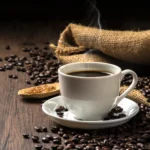


Liquid Gold: The World’s Most Addictive Daily Ritual
Part 1:

Cyclist love coffee. We even have a “coffee-ride”. It is a cherished ritual to stop for coffee during a ride. But why coffee? Why does cyclist love coffee so much? Surely it is not just the taste? There must be more to it… Is it because it is a legal accessible performance enhancer?
Caffeine originates in up to 63 species of plants.
Caffeine can make that last home sprint against your best buddy seems effortless and it can also prevent you from hitting that wall on that 4-hour ride. And then what would a 4-hour ride be if we can’t stop and have a coffee with friends and talk about the gruelling climb or headwind.
But to get the most out of your coffee, you need to look past the café culture and understand the actual science behind that cup of brew.
Most people do know that caffeine gives you that boost… but how does caffeine work? Let’s talk science.
A common misconception is that caffeine provides your muscles with extra physical energy. But it doesn’t. Researchers are not completely sure how caffeine gives more energy or the perception of lack of fatigue, but the most likely theory is that Caffeine targets the central nervous system.
During a long or hard ride, a chemical called adenosine builds up in your brain, binding to receptors that signals fatigue. Caffeine’s molecular structure is nearly identical to adenosine. When you ingest it, caffeine docks into those same receptors, effectively blocking the fatigue signals. Caffeine is rapidly absorbed from the small intestine but also in the stomach. In saliva caffeine reaches 65-85% of plasma levels. In other words, your spit contains 65-85% of as much caffeine that is in your blood. Caffeine is effectively distributed through your body. Caffeine easily passes through most, if not all your biological membranes including the blood-brain barrier. When caffeine is consumed it appears within minutes in the blood, and it will peak anything from 30-120 minutes after consumption. The bioavailability of caffeine is very high it is around 100% as seen in studies. Meaning you can absorb 100% of the caffeine you consume.
Caffeine goes straight into your general bloodstream and affects your whole body before your liver can break any of it down. The rates of caffeine metabolism and breakdown appear to differ between individuals through both environmental and genetic influences. Over 95% of caffeine is metabolized by the liver. The average half-life of caffeine is anything from 4 and 6 hours. There have been some studies to see if performance increased in cyclist who abstained from caffeine.
But habitual caffeine ingestion does not consistently alter the ergogenic benefits of acute caffeine supplementation on exercise performance. There are many reviews on how regular intake impacts exercise outcomes. Research remains heavily mixed and complex due to measurement difficulties, genetics, and varying study protocol.
Although caffeine can help in performance too much can also have side effects. And some can be serious. There are different types of side effects.
- Central Nervous System:
Anxiety and nervousness: Excess caffeine stimulates the release of adrenaline, triggering a “fight-or-flight” response.
Insomnia: It blocks adenosine, a chemical that also helps you to sleep, leading to difficulty falling asleep and shorter sleep cycles.
Headaches: Overuse can cause head pain, and sudden cessation often causes severe caffeine withdrawal and headaches.
Jitters and tremors: You may experience uncontrollable shaking or trembling hands.
Irritability: Fluctuations in energy can leave you feeling moody, agitated, or angry.
Dizziness: High doses can cause light-headedness or vertigo.
The “Caffeine Crash”: A sharp drop in energy levels after the stimulant leaves your system, resulting in severe rebound fatigue.
- Cardiovascular System:
Rapid heart rate (Tachycardia): Your heart may beat abnormally fast.
Heart palpitations: A fluttering, pounding, or skipped-beat sensation in your chest.
High blood pressure: Caffeine can cause a temporary spike in blood pressure, which may become a chronic issue over time.
- Digestive & Urinary Systems:
Stomach upset and nausea: Caffeine increases stomach acid production, causing heartburn or acid reflux.
Diarrhoea: It acts as a mild laxative, speeding up bowel movements.
Frequent urination: It is a natural diuretic, which can quickly lead to dehydration.
- Symptoms of a Severe Overdose:
According to clinical reviews from the Cleveland Clinic and Mayo Clinic, extreme caffeine toxicity (usually from highly concentrated powders, energy shots, or supplements) requires immediate medical attention:
Confusion and delirium
Hallucinations
Severe vomiting
Chest pain and heart arrhythmias
Difficulty breathing
Muscle twitching or Rhabdomyolysis (muscle breakdown)
Seizures
To move from just coffee drinking to performance enhancing, timing is everything. As said before blood plasma levels of caffeine peak roughly 45 to 60 minutes after consumption, meaning your fuelling strategy needs to be proactive.
The recommend dose is 3mg to 6mg of caffeine per kilogram of body weight. For an 80kg rider, that is 240mg to 480mg. Use the caffeine about an hour before your ride as caffeine peaks anything from 30 minutes to 120 minutes.
Consume this dose one hour before your tyres hit the tarmac. A strong home-brewed filter coffee or a dedicated caffeine tablet ensures you start the ride with peak stimulation. The Mid-Ride Top-Up Caffeine has a half-life of about four to five hours, but its most acute performance benefits begin to wane after two. On rides extending past 90 minutes, you need to top up. Instead of waiting for the café stop, consuming a controlled dose of 50mg to 100mg every 1 to 2 hours will keep your focus and power output linear.
If your club ride features a competitive final sprint or a brutal concluding climb, you can trigger a final performance spike using a fast-acting delivery system.
Take a caffeine chewing gum or liquid energy shot 15 to 20 minutes before the key segment. Because these are absorbed through the lining of the mouth (buccal absorption) rather than the gut, they enter your system almost instantly.
For an average club rider, this alters your Rate of Perceived Exertion (RPE). Sports science consistently proofs that caffeine lowers RPE. What this means is if you are holding a threshold pace up a steep climb it will feel noticeably easier, allowing you to sustain a higher power output for longer before your legs starts to scream at you.
Many studies have been done on caffeine. All on them agree that there can be improvement on performance up to 20%.
While caffeine is famous for boosting performance during a ride, sports science reveals it is equally potent for post-exercise recovery.
The primary way caffeine aids in recovery is by accelerating muscle glycogen resynthesis—the process of restocking your body’s depleted carbohydrate fuel tanks.
A landmark study published by the American Physiological Society found that when athletes consumed caffeine alongside carbohydrates after an exhaustive workout, they stored 66% more muscle glycogen four hours post-exercise compared to when they consumed carbohydrates alone.
Caffeine acts as a catalyst for your recovery meal through two specific physiological mechanisms:
1. Insulin and Glucose Elevation: Co-ingesting caffeine with carbohydrates triggers a significantly higher blood glucose and plasma insulin response. Insulin is the primary hormone responsible for driving nutrients out of your blood and directly into depleted muscle cells.
2. Enzyme and Transporter Activation: Caffeine stimulates key signalling proteins and enzymes—specifically glycogen synthase and GLUT-4 glucose transporters. These act like cellular doorways, actively pulling glucose into the muscle tissue at an accelerated rate.
The Catch: When to Use the “Recovery Espresso”
While this recovery hack is incredibly powerful, it comes with a major caveat for club riders: Sleep Disruption.
• The Best Scenario: This strategy is ideal for morning club rides, multi-day stage races, or when you are training twice in one day. Having a post-ride meal with a double espresso or a caffeinated recovery shake rapidly restarts your engine for the next day.
• The Worst Scenario: Avoid high-dose post-workout caffeine if you finish riding in the late afternoon or evening. Because caffeine has a half-life of 4 to 6 hours, using it late in the day will sabotage your deep REM sleep. Sleep is the absolute foundation of muscle repair and testosterone production; destroying your sleep cycle will completely offset any glycogen-loading benefits.
Sources:
TrainingPeaks
Mayo Clinic
Gene Food
National Institute of Health
UCLA Health


